Non-Surgical Spinal Decompression Therapy in Sugar Land, TX
Home » Non-Surgical Spinal Decompression Therapy in Sugar Land, TX
Non-Surgical Spinal Decompression Therapy in Sugar Land, TX
Constant back or neck pain can wear you down, especially when you’ve been told that surgery, injections, or long-term medication are your only next steps. Fortunately, there is a safer, nonsurgical path.
Spinal decompression therapy in Sugar Land at Hogan Spine & Rehabilitation is a gentle, nonsurgical way to ease pressure off the disc and support healing. Since 2005, we’ve served Sugar Land and Fort Bend County with the Chattanooga Titron DTS system to help patients find sustainable relief from their pain.
What Nonsurgical Spinal Decompression Treats in Sugar Land Patients
Spinal decompression helps when rest, medication, and injections have not eased your disc pain. Many patients come to us with a confirmed disc issue, and the important step is determining whether decompression is the right fit for their condition.
Conditions We Treat
At Hogan Spine & Rehabilitation, we offer spinal decompression in Sugar Land to help you find lasting relief from the following conditions:
Failed back surgery syndrome, such as a laminectomy and microdiscectomy
Many patients come to us looking for targeted herniated disc and sciatica treatment in Sugar Land. By relieving pressure on the affected disc, our care helps soothe irritated nerves and alleviate pain.
Who Is Not a Candidate for Spinal Decompression?
Honest care means putting your safety first and being upfront when a treatment isn't the right fit. Spinal decompression is highly effective for many individuals, but it is not advised for those with:
Prior spinal fusion hardware (including plates or screws) or advanced osteoporosis
Pregnancy or diagnosed spinal tumors
An abdominal aortic aneurysm (a bulge in the main abdominal blood vessel)
Severe, rapidly progressing nerve damage that calls for prompt surgical intervention
We prioritize your well-being above all else. On your initial visit, our team conducts a comprehensive review of your medical history and diagnostic imaging, recommending decompression only when we are confident it is a safe and beneficial option for you.
How DTS Decompression Works: The Vacuum Effect Explained
Decompression Traction System (DTS) Therapy uses gentle, computer-controlled stretching to reduce pressure inside the disc and around nearby nerves. This pressure change may help improve disc function and relieve pain.
Understanding how it works takes all the mystery out of your care.
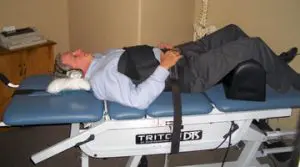
What Happens on the Chattanooga Triton DTS Table
Our DTS therapy in Sugar Land uses the Chattanooga Titron DTS Decompressive Traction System, a sophisticated and widely used decompression system.
In the table, you lie fully clothed, face up or face down, secured by a harness at the hips for lumbar work or under the chin for cervical work. The computer applies force and then releases it about once a minute throughout the session.
The Vacuum Effect and Disc Imbibition
Gentle spinal decompression creates negative pressure inside the disc, which may reduce pressure on bulging material and irritated nerves. Simultaneously, this pressure change can support the disc’s ability to absorb fluids, drawing in oxygen, water, and nutrients to promote healthier tissue function.
How It Differs From a Chiropractic Adjustment
Chiropractic adjustments focus on restoring joint movement, while spinal decompression slowly stretches the spine to help heal damaged discs. These treatments complement each other well and are often paired together in a personalized care plan.
Here is a side-by-side comparison of decompression, chiropractic care, and surgery:
Spinal Decompression vs. Chiropractic Adjustment vs. Disc Surgery
Removes/reshapes disc material to relieve pressure
Session length
~12–15 mins
10–15 mins
Hours, plus hospital stay
Recovery
None; walk in, walk out
Minimal; mild soreness possible
Weeks to months, procedure dependent
Best for
Herniated, bulging, degenerative discs, sciatica
Joint restriction & spine mobility
Severe damage unresponsive to conservative care
Cost & coverage
Often insurance eligible (varies)
Often insurance eligible
Highest cost; plan dependent
What to Expect During Your First Session at Hogan Spine & Rehab
Your first visit answers one question before anything else: Is decompression safe and right for you? Nothing on the table begins until the doctor confirms you are a good fit. Here is how that visit goes.
Consultation and health history: We sit down to discuss your symptoms, past treatments, and goals to understand what drives your pain.
Movement and nerve exam: We check your mobility, reflexes, and nerve function to pinpoint the exact source of your discomfort.
Imaging Review: If available, we examine your X-rays or MRI to target the specific disc causing your pain.
Safety Screening: We confirm that decompression is a safe and appropriate option for your condition before moving forward.
Your Personalized Plan: You leave with a clear, thorough plan, including the recommended number of sessions and realistic expectations for your recovery.
A typical course runs 15 to 24 sessions over 4 to 6 weeks, depending on your condition and response to care. Follow up treatment is recomended after completeing protocols. When you are ready to start, schedule your consultation, and we will take it from there.
The Three Phases of Our Sugar Land Decompression Protocol
Lasting relief follows a clear sequence. Our nonsurgical spinal decompression treatment in Sugar Land moves through three targeted phases to help your spine heal safely and effectively.
Phase I: Pain Relief and Disc Rehydration
Gentle traction cycles reduce pressure and support disc hydration through imbibition. Many patients report meaningful pain relief within the first 5 to 10 sessions. Less pain is encouraging, but it does not mean the disc has fully healed.
Phase II: Structural Stabilization with Biofeedback
Once pain settles, we rebuild the support around the disc. Rehabilitative exercises with biofeedback retrain your spinal movement and muscle control. This addresses the two main causes of most disc injuries: limited flexibility and reduced muscle stability.
Phase III: Muscular Support and Long-Term Prevention
The final phase locks in your progress with in-office and at-home resistance and core work. Your at-home exercises matter most here, since consistent movement is the single biggest predictor of lasting relief. Regular movement helps maintain disc health and prevent recurrence.
Why Sugar Land Patients Choose Hogan Spine & Rehabilitation Center
When choosing where to go for lower back pain, sciatica decompression, or any disc-related pain relief in Sugar Land, three things matter most: expertise, equipment, and quality care. Hogan Spine & Rehabilitation delivers on all three.
Recognized locally for chiropractic care in Sugar Land and Fort Bend County, we pair that reputation with a careful, patient-first approach to disc care. Dr. Jeff Hogan, DC, is your chiropractor for spinal decompression in Sugar Land, with over two decades of clinical experience in Texas. He evaluates disc problems and matches patients to appropriate care.
We use the Chattanooga Titron DTS system for precise and repeatable spinal decompression treatments, not a repurposed traction table. If you’re looking for spinal decompression near me and want a provider who screens carefully before recommending treatment, that’s exactly how we operate.
Insurances We Accept
We accept the following insurances. If you are not covered by any of these programs, call us to determine our discount cash prices in addition to seeing if your insurance will work with our care.
Book Your Sugar Land Spinal Decompression Consultation Today
You do not have to organize your life around disc pain. One evaluation can tell you whether decompression fits your case and what real relief would look like. Our spinal decompression therapy in Sugar Land is nonsurgical, tailored to your disc, and built around the three-phase approach that separates lasting recovery from short-term relief.
We use decompression for herniated and bulging discs, sciatica, degenerative disc disease, pinched nerves, facet syndrome, and chronic low back or neck pain. It may be considered for patients exploring alternatives to injections or disc surgery.
No. You stay fully clothed on a computer-controlled table while a harness applies a gentle, rhythmic stretch. Most patients describe it as a deep, relaxing stretch. Sessions run about 20 to 30 minutes, and many patients relax so completely they fall asleep.
Most treatment plans involve 15 to 24 sessions over 4 to 6 weeks. Many patients notice significant pain relief within the first 5 to 10 visits. However, completing the full plan helps support disc hydration, stability, and longer‑term results.
Decompression is not appropriate for patients with spinal fusion hardware, advanced osteoporosis, pregnancy, spinal tumors, an abdominal aortic aneurysm, or severe nerve damage needing immediate surgery. We screen every patient against these criteria at the first consultation before starting treatment.
It may help in some cases. Many patients come to us after a laminectomy or microdiscectomy that did not resolve their pain. Decompression can relieve pressure on the spinal levels above and below a prior surgical site and help manage scar-tissue-related discomfort.
We accept most major insurance plans, including Blue Cross Blue Shield, Aetna, Cigna, UnitedHealthcare, and Medicare. Simply contact us before your first appointment, and our team will check your coverage and walk you through any out-of-pocket costs with zero surprises.
Chiropractic adjustments focus on realigning your joints with quick, targeted movements, while spinal decompression uses a specialized table to gently stretch the spine and ease pressure inside your discs. Because they target different sources of pain, combining both may provide complementary benefits.
Get Your Consultation Today
And Come Discover Why We Are Sugar Land's Top Choice For Pain Relief and Rehabilitation
Dr. Hogan is a Sugar Land native and Parker College of Chiropractic graduate with over two decades of clinical experience in Texas. A prominent community leader and member of the Texas Chiropractic Association, he serves on the board of the Fort Bend Chamber of Commerce and was honored as a Medical Honoree by the Arthritis Association in 2019.